
Skin service
Chemical Peel
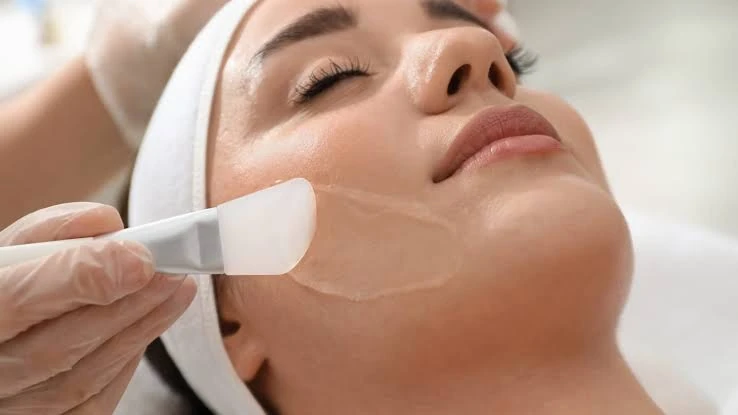
Chemical peeling is the application of a chemical agent to the skin, which causes controlled destruction of a part of or the entire epidermis, with or without the dermis, leading to exfoliation and removal of superficial lesions, followed by regeneration of new epidermal and dermal tissues.
Overview
About Chemical Peel
Chemical Peel for skin resurfacing
Chemical peeling is the application of a chemical agent to the skin, which causes controlled destruction of a part of or the entire epidermis, with or without the dermis, leading to exfoliation and removal of superficial lesions, followed by regeneration of new epidermal and dermal tissues.
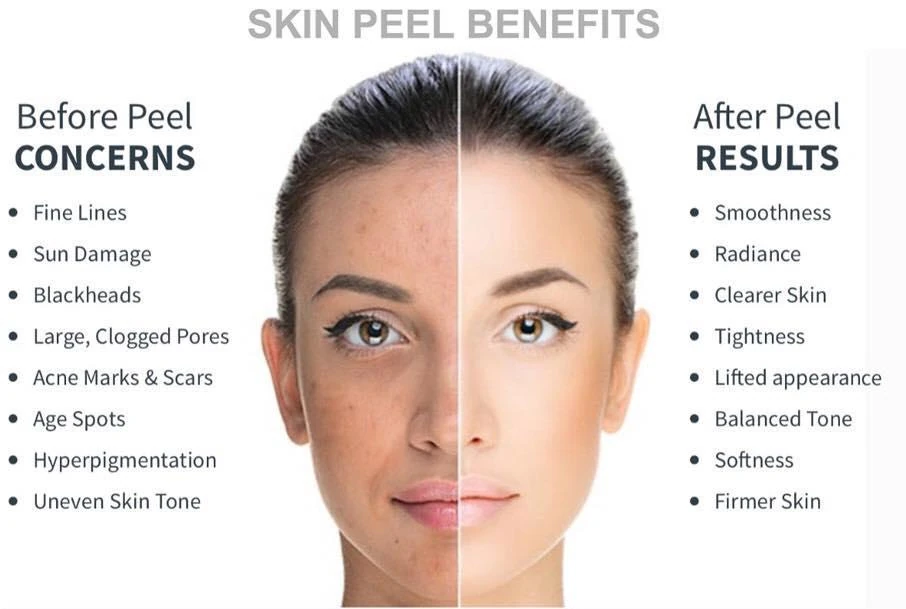
Indications for chemical peeling include:
Pigmentary disorders
- Melasma
- Postinflammatory hyperpigmentation
- Freckles
- Lentigines
- Facial melanoses
Acne
- Superficial acne scars
- Postacne pigmentation
- Comedonal acne
- Acne excoriιe
- Acne vulgaris-mild to moderately severe acne
Aesthetic
- Photoaging
- Fine superficial wrinkling
- Dilated pores
- Superficial scars
Epidermal growths
- Seborrheic keratoses
- Actinic keratoses
- Warts
- Milia
- Sebaceous hyperplasia
- Dermatoses papulosa nigra
Contraindications include patients with active bacterial, viral or fungal infection, tendency to keloid formation, facial dermatitis, taking photosensitizing medications and unrealistic expectations.
Classification of peels according to the histological depth of necrosis: [5]
A. Very Superficial light peels : Necrosis up to the level of stratum corneum. Agents used: TCA 10%, GA 30-50%, Salicylic acid 20-30%, Jessner′s solution 1-3 coats, Tretinoin 1-5%
B. Superficial light peels : Necrosis through the entire epidermis up to basal layer. Agents used: TCA 10-30%, GA 50-70%, Jessner′s solution 4-7 coats
C. Medium depth peels : Necrosis up to upper reticular dermis. Agents used: TCA 35-50%, GA 70% plus TCA 35%, 88% phenol un-occluded, Jessner′s solution plus TCA 35%, solid CO 2 plus TCA 35%
D. Deep peels : Necrosis up to mid-reticular dermis. Agents used: Baker-Gordon phenol peel
Skin preparation before peeling
- The patient is asked to wash the face with soap and water.
- The hair is pulled back with a hair band or cap.
- The patient lies down with head elevated to 45° with the eyes closed.
- Using 2" x 2" gauze pieces, the skin is cleaned with alcohol and then degreased with acetone.
Postoperative Care
A careful maintenance program is essential to maintain the results of chemical peeling in most patients.
- In the postpeel period, edema, erythema and desquamation occur. In superficial peels, this lasts for 1-3 days, whereas in deeper peels, it lasts for 5-10 days.
- Mild soap or a non-soap cleanser may be used. If there is crusting, a topical antibacterial ointment should be used to prevent bacterial infection.
- Clear instructions must be given to the patient for the postprocedure period.
- Cold compresses or calamine lotion may be used to soothe the skin.
- They should be told to use broad-spectrum sunscreens and only bland moisturizers until peeling is complete.
- They should avoid peeling or scratching the skin.
- Analgesics are not usually needed but may be advised in case of burning sensation.
More Skin services
Related services.
We are here to help
Ready to schedule your visit?
Call us at +977 9865442496 or send a message — we are here to help.